
The most surprising thing someone told me this week.
Sometimes the AI conversation is happening in places the AI conversation never thinks about.


I needed a haircut this week. The shop I go to is a small one on a side street, run by a guy named Ramesh who has been cutting my hair for two years. He’s in his late fifties. He doesn’t own a smartphone. He uses a flip phone that he checks twice a day.
I sat down in the chair. We talked about the usual things — his daughter’s wedding, the heat, whether the cricket team had a chance this season. Then he said, while he was cutting around my ear:
I made my brother in Mumbai a video for his birthday last month. Have you used this thing, ChatGPT?
I almost laughed, because I forgot for a second that the man cutting my hair was about to teach me something.
I asked him what he made. He said his brother turned sixty-five. They hadn’t seen each other in eight years. He’d asked his nephew, who lives here, to help him. Together they used ChatGPT to make a four-minute video using old photos Ramesh had scanned at the photo studio next door. They added a song their mother used to sing when they were kids. The nephew did the technical part. Ramesh did the remembering.
He said his brother called him crying. Then his brother showed it to their cousins in Mumbai. The cousins showed it to people in their society. He thinks maybe two hundred people have seen it now, he said, switching from English to Hindi and back. All of them know my brother is sixty-five and our mother used to sing this song.
He finished my haircut. He brushed off my collar. He charged me what he always charges me. I overpaid him because I felt stupid for being surprised by anything anyone ever told me about AI again.
I want to write about this for a minute, because I think it’s the third time in two months I’ve had a conversation like this. The dental hygienist I wrote about. A cousin who I thought wasn’t on the internet at all and turned out to have made his daughter a custom song for her engagement. Now Ramesh.
The version of AI I keep meeting in the loud places is not the version that’s actually happening.
What is actually happening, in the small streets where most of the world’s actual lives are lived, is that people who have never been in a tech conversation, who don’t know what GPT stands for, who have never seen a Hacker News thread, are using this technology for the most ancient possible reason: to make something for someone they love, across a distance they cannot otherwise cross.
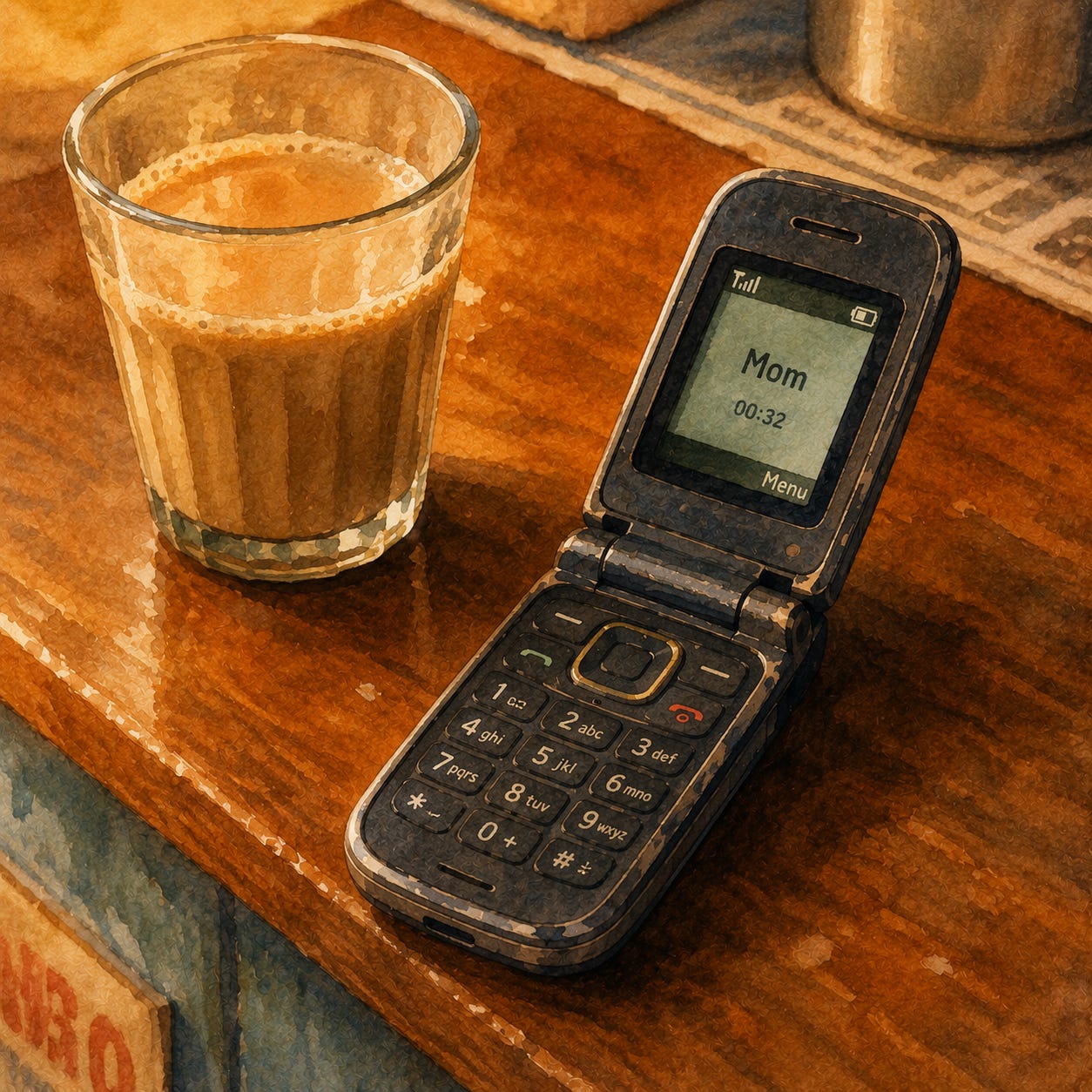
Ramesh’s brother in Mumbai is going to die one day, and Ramesh will have made him a video the year before, when he turned sixty-five, with the song their mother used to sing. The two hundred people in their village will remember it. The nephew who helped will remember it. Ramesh himself, when his brother is gone, will have it on his flip phone (he asked his nephew to put it there too, just in case).
None of that is in any AI conference. None of it is in any earnings report. None of it shows up in the productivity metrics.
But this is the thing. This is the actual thing.
I keep thinking that the people writing the loud version of the AI story think they’re documenting the technology. They’re not. They’re documenting the part of the technology that happens to be in a language they speak — productivity, capital, scale, jobs. There’s another language this technology is being used in, by people who don’t go to those conferences, and that language is older than any of us, and it sounds like a mother’s song.
The dental hygienist. The barber. The cousin. The Uber driver. The high school teacher. The grandfather in the village who watched the video and learned what a video on a phone could feel like, when it’s about your brother.
This is the real story. I keep meeting it. I will keep writing about it. I think there’s going to be a lot of it.
I’m really glad you’re here.
— Tapan
PS — Tell me about the person in your life I’d least expect to be using AI, and what they’ve quietly been making. I collect these.